
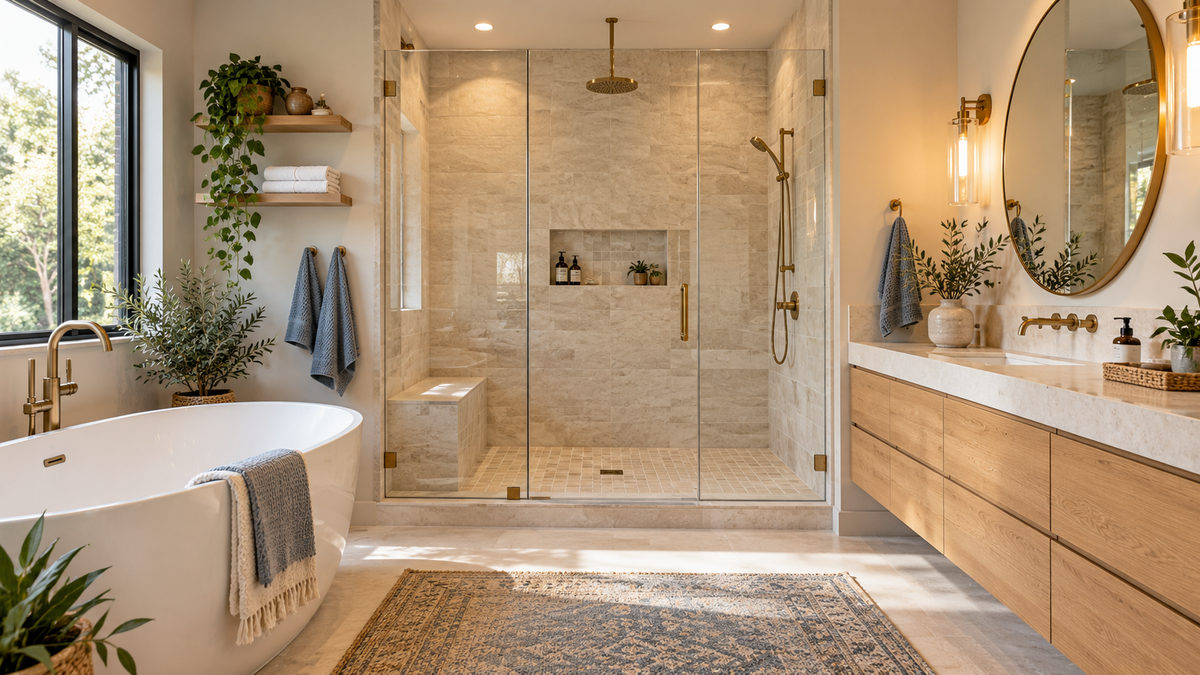
What a bathroom remodel typically costs
Bathrooms pack a lot of plumbing, tile, and waterproofing into a small space, so costs per square foot run higher than most rooms. Here are broad ballparks to help you plan:
| Project scope | What’s usually included | Typical range* |
|---|---|---|
| Refresh | Paint, new fixtures, lighting, mirror, hardware, regrouting | $3,000–$10,000 |
| Mid-range remodel | New vanity, toilet, tile, tub or shower surround, flooring, and fixtures | $15,000–$35,000 |
| Primary bath or upscale | Custom tile shower, freestanding tub, double vanity, heated floors, layout changes | $40,000–$80,000+ |
| Accessibility upgrade | Curbless or walk-in shower, grab bars, comfort-height fixtures, wider doorway | $8,000–$25,000+ |
*Broad national ballparks for planning only, not quotes. Local labor rates, materials, and permit requirements can move your price significantly. Written local quotes are the only way to know your real cost.
What affects the price
- Moving plumbing. Keeping the toilet, sink, and shower where they are is the easiest way to save. Relocating drains often means opening floors and walls.
- Tile. Tile work is labor-intensive. Large-format tile, intricate patterns, and floor-to-ceiling installs all add time and cost.
- Waterproofing. A properly waterproofed shower is one of the most important parts of the job and one of the easiest places to cut corners. Ask each contractor what waterproofing system they use.
- Ventilation and electrical. Many codes require an exhaust fan and GFCI-protected outlets. Adding heated floors or new lighting circuits adds electrical work.
- Fixtures and finishes. Vanities, faucets, and shower valves range from budget to luxury, and your choices can swing the total by thousands.
Common bathroom installation jobs
Not every bathroom project is a full remodel. Many requests are for a single installation, and knowing which kind of pro handles it helps you get accurate quotes:
| Job | Who usually does it | Make sure the quote covers |
|---|---|---|
| Shower or tub installation | Bathroom remodeler, often with a licensed plumber | Removal of the old unit, valve replacement, waterproofing, and wall repairs |
| Tub-to-shower conversion | Bathroom remodeler | Drain relocation if needed, shower pan or curbless base, glass door, and tile or surround |
| Walk-in tub | Specialty installer or remodeler | Electrical for jets or heaters, larger water heater if needed, and doorway clearance |
| Vanity and sink | Remodeler, handyman, or plumber | Countertop, faucet, drain hookup, and any wall or floor patching |
| Toilet replacement | Plumber or handyman | New wax seal and supply line, flange repair if needed, and disposal of the old toilet |
| Tile floor or shower walls | Tile installer or remodeler | Demolition, backer board, waterproofing membrane in wet areas, grout, and sealing |
If you’re planning more than one of these, a single bathroom remodeler coordinating the trades is usually simpler than hiring each one separately.
How long it takes
A refresh can take a few days to a week. Mid-range remodels typically run three to six weeks of construction, and larger primary bath projects can take six to ten weeks or more, depending on custom orders and inspections. If it’s your only bathroom, ask how the contractor will keep a toilet working during the project. Our week-by-week bathroom remodel timeline shows what happens in each phase.
Planning tips before you get quotes
- Decide on the tub. Converting a rarely used tub into a walk-in shower is popular, but if it’s the only tub in the house, families with young kids and some future buyers may prefer one.
- Think long term. Blocking in the walls for future grab bars and choosing a low or no-threshold shower costs little now and makes the room easier to use as you age.
- Collect photos. Pictures of finishes you like help contractors give more accurate quotes.
How to get accurate bathroom renovation quotes
- Measure the room and note the ceiling height, window, and door locations.
- Write a short scope list: what stays, what goes, and what moves. Moving plumbing changes the price more than almost anything else.
- Pick a finish level (budget, mid-range, or high-end) and collect a few photos of fixtures and tile you like.
- Ask every contractor to quote the same scope so you’re comparing like with like. Our guide to comparing contractor quotes includes a side-by-side checklist.
- Get two or three written quotes that list demolition, waterproofing, permits, fixtures, and cleanup separately.
Questions to ask a bathroom remodeler
- Are you licensed and insured where I live? Will a licensed plumber handle the plumbing?
- What waterproofing method do you use in showers, and is it warrantied?
- Who pulls permits, and are they included in the price?
- Can I see photos of tile work you’ve done and talk to recent clients?
- What’s the payment schedule and workmanship warranty?
More tips: 5 questions to ask before hiring a local contractor.