
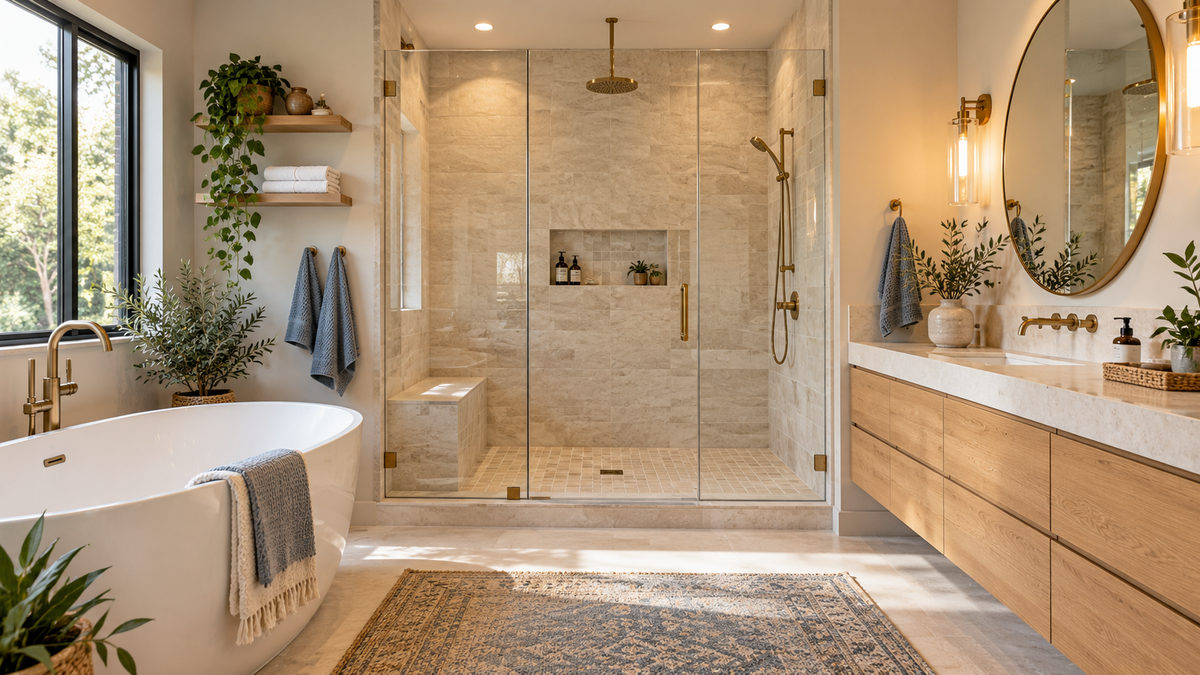
A bathroom is small, but it packs plumbing, electrical, ventilation, waterproofing, and tile into one room, and each step has to happen in the right order. Knowing the sequence helps you plan around a bathroom you can’t use and spot when a contractor’s schedule doesn’t add up.
The big picture
| Phase | Typical time* | What happens |
|---|---|---|
| Planning & design | 2–4 weeks | Collect quotes, choose a contractor, finalize layout and finishes |
| Ordering & permits | 1–6 weeks | Order vanity, tile, and fixtures; contractor pulls permits |
| Demolition | 1–2 days | Old fixtures, tile, and drywall come out |
| Rough-in & inspection | 2–5 days | Plumbing, electrical, and venting changes; rough inspection if required |
| Walls & waterproofing | 2–4 days | Cement board or drywall, shower waterproofing, cure time |
| Tile | 3–7 days | Floor and shower tile, grout, and sealing |
| Fixtures & finish | 2–5 days | Vanity, toilet, glass, trim, paint, and accessories |
| Final inspection & punch list | 1–3 days | Inspection, touch-ups, and walkthrough |
*General ranges for a mid-range remodel. Large primary bathrooms, custom orders, and busy inspection offices can stretch any phase.
Before construction: weeks 1–6
Planning and quotes
Start by deciding what you’re changing and what you’re keeping. Keeping the toilet, sink, and shower in their current spots saves both time and money. Then gather two or three written quotes. Our guide on how to compare contractor quotes shows how to line them up fairly.
Ordering materials
Lead times are one of the biggest causes of delays. Custom vanities, specialty tile, and glass shower enclosures can take several weeks. Many contractors won’t schedule demolition until the key items are on site, which protects you from a torn-out bathroom sitting idle.
Permits
If you’re moving plumbing, adding circuits, or changing the layout, your city or county will probably require a permit. Approval can take anywhere from a day to several weeks depending on where you live. Your contractor should know local timelines.
Construction week 1: demo and rough-in
Demolition usually takes a day or two. Once the walls and floor are open, the crew may find surprises: water damage, rotted subfloor, or outdated wiring. This is where your 10–20% contingency budget earns its keep.
Next comes rough-in, which covers new supply and drain lines, valve placement, electrical boxes, and exhaust fan ducting. If your project needs permits, a rough inspection typically happens before the walls are closed.
Construction weeks 2–3: waterproofing and tile
Walls go back up with moisture-resistant board, and the shower gets a waterproofing system. Some systems need cure time before tile can go on. Don’t rush this step; failures here show up years later as leaks and mold behind finished tile.
Tile is usually the longest single phase. Large-format tile, niches, patterns, and floor-to-ceiling installs take longer. Grout typically needs time to cure before sealing.
Construction weeks 3–4+: fixtures and finish
The vanity, countertop, sink, toilet, faucets, and shower trim go in, followed by glass, mirrors, lighting, paint, and accessories. Custom glass is often measured after tile is finished, which can add one to two weeks while it’s fabricated.
Finally, the inspector signs off (if a permit was pulled), and you walk through with your contractor to build a punch list of small fixes.
What causes delays
- Back-ordered materials, especially vanities, specialty tile, and glass
- Hidden damage found during demolition
- Inspection scheduling in busy permit offices
- Change orders, or decisions made mid-project
- Crew scheduling when subcontractors handle plumbing, electrical, or glass
How to keep your project on track
- Make all finish selections before demolition starts.
- Ask for a written schedule with milestones, and ask what could push it back.
- Confirm materials are on site before demo day.
- If it’s your only bathroom, ask how the contractor will keep a toilet working overnight.
- Agree on how change orders are priced and approved, in writing.
Ready to start? See typical costs on our bathroom remodel quotes page, or use the form below to hear from local remodelers.