
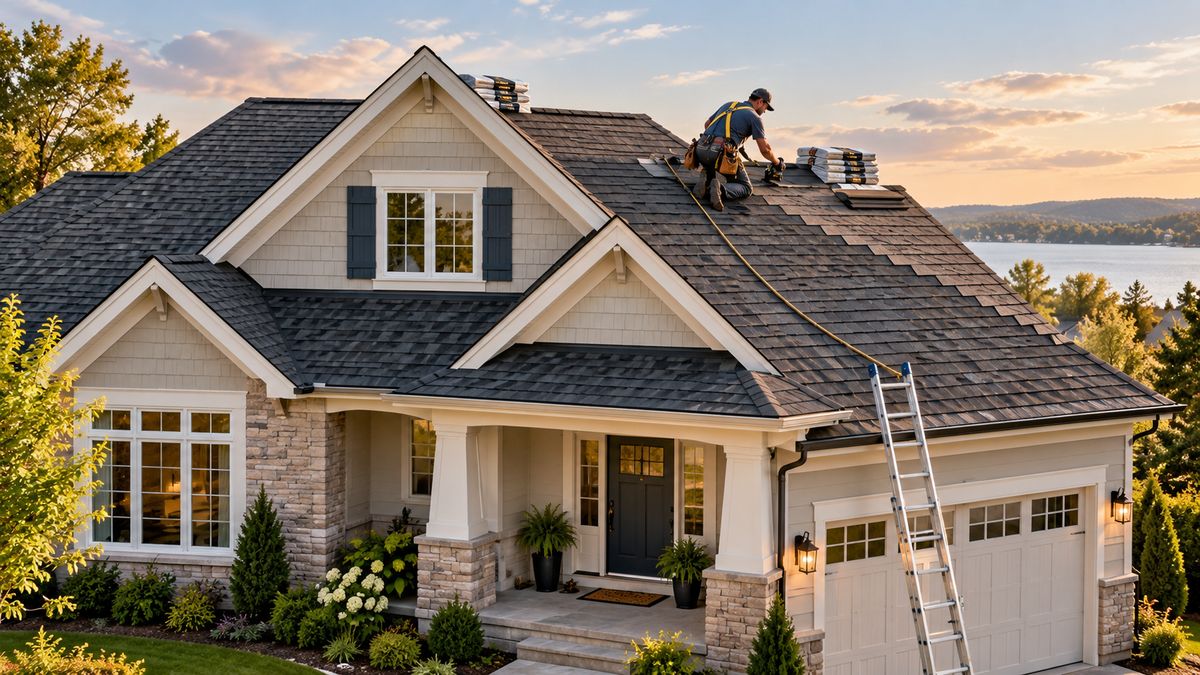
Repair or replace?
Not every leak means you need a new roof. A repair often makes sense when damage is limited to one area and the roof is relatively young. Replacement is usually the better call when you see:
- Shingles that are curling, cracking, or missing in several areas
- Bald spots where shingles have lost their granules (check your gutters)
- Sagging sections, or daylight visible through the attic boards
- Repeated leaks in different places
- An asphalt roof that’s 20 or more years old
A local roofer can inspect the roof and tell you honestly which option makes sense. Getting more than one opinion is smart for any big decision.
Roofing materials compared
| Material | Good to know | Typical lifespan* |
|---|---|---|
| Asphalt shingles | Most common and most affordable; impact-resistant versions are available for hail-prone areas | 20–30 years |
| Metal | Higher up-front cost, very durable, sheds snow well, and can be energy efficient | 40–70 years |
| Clay or concrete tile | Heavy and long-lasting; common in warm, dry climates; may need structural support | 50+ years |
| Wood shake | Natural look but more maintenance; restricted in some wildfire-prone areas | 25–30 years |
| Synthetic / composite | Mimics slate or shake at lower weight; quality varies by manufacturer | 30–50 years |
*Commonly cited ranges. Actual life depends on climate, installation quality, ventilation, and maintenance.
What a new roof costs
Roofers price by the “square,” or 100 square feet of roof. An asphalt shingle replacement on a typical single-family home often lands somewhere around $10,000–$25,000, while metal and tile commonly cost two to three times as much or more. Your quote will depend on:
- Roof size and steepness (steep roofs need more safety equipment and labor)
- How many old layers need to be torn off
- Rotted decking that needs replacing once the old roof is off
- Flashing, vents, skylights, and chimneys
- Permits, disposal, and local labor rates
Ranges above are general ballparks for planning, not quotes.
Storm damage and insurance claims
If hail or wind damaged your roof, take photos, prevent further water damage if you can do so safely, and contact your homeowners insurance company. Many homeowners also have a local roofer inspect the roof and document damage. Your insurer’s adjuster decides what the policy covers; damage from sudden storms is often covered, while normal wear and tear usually isn’t.
Watch out for storm chasers. After big storms, out-of-town crews often go door to door. Red flags include high-pressure “sign today” tactics, asking you to sign over your insurance claim rights, demanding large payments up front, no local address or references, and offers to “cover” or waive your deductible. In many states, contractors aren’t allowed to waive or rebate your deductible.
Questions to ask a roofer
- Are you licensed (where required) and insured, including workers’ comp?
- Will you tear off the old roof or install over it, and why?
- Is there a manufacturer warranty, and what does your workmanship warranty cover, for how long?
- How will you handle rotted decking if you find it, and what does it cost per sheet?
- Who pulls the permit and schedules inspections?
- How do you protect landscaping and clean up nails and debris?